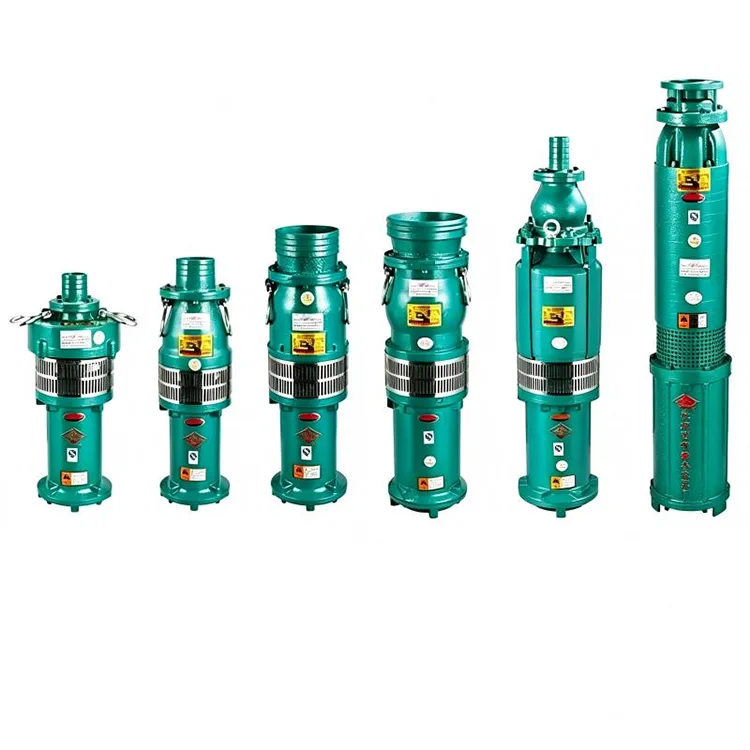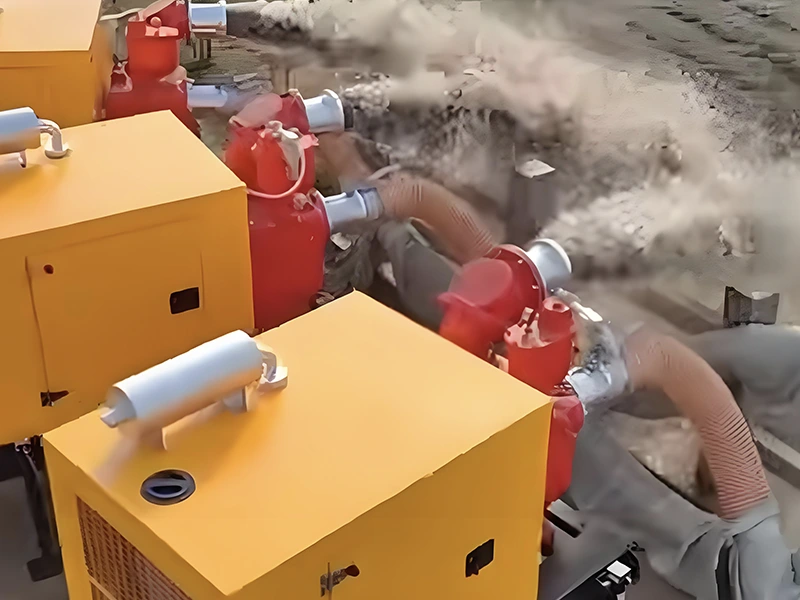
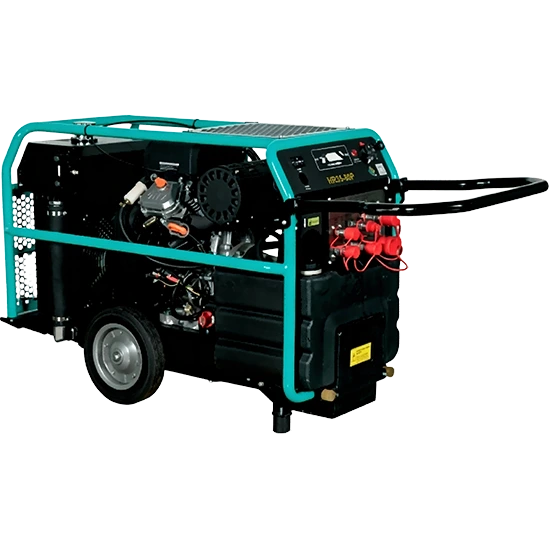

Jianghe provides practical water-management equipment for demanding outdoor applications, and its Compact High-Flow Diesel-Driven Water Pump combines portability, high water output, independent diesel power, and stable operation for flood drainage, agricultural irrigation, construction-site dewatering, and temporary water transfer. Designed for locations where mains electricity may be unavailable, this type of pump can be rapidly deployed when dependable water movement is essential.
A compact diesel-driven water pump is designed to move substantial volumes of water while maintaining a portable footprint and independent operation. Jianghe's solution provides a flow range of 25–200 m³/h, a head range of 15–26 m, and outlet pipe diameters from 50 mm to 150 mm. Manual-start and electric-start configurations allow users to select equipment according to operating conditions. This article explains the working advantages, technical specifications, application scenarios, model-selection considerations, and maintenance factors that buyers should evaluate before selecting a high-flow diesel water pump.
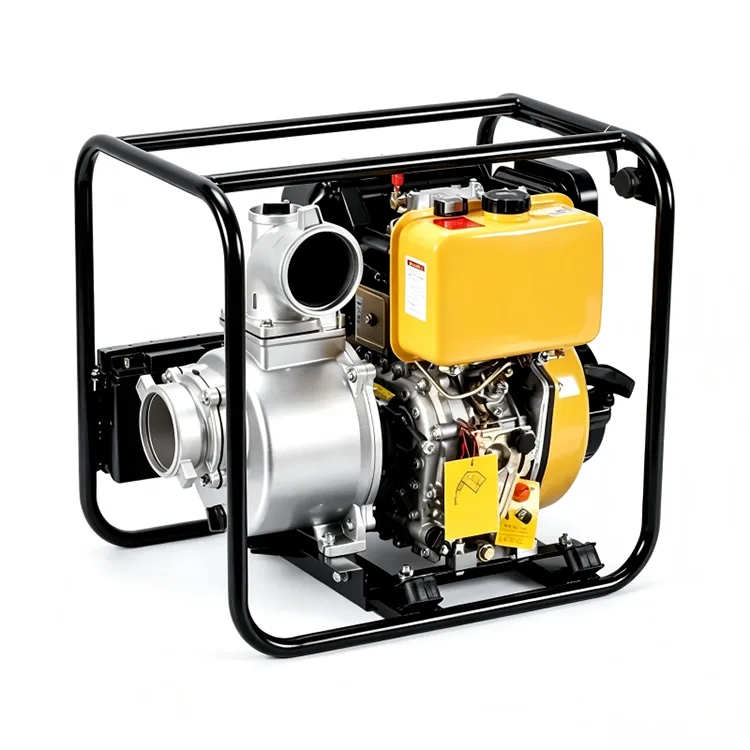
Table of Contents
- Why Is a Compact Diesel-Driven Pump Useful for High-Flow Water Transfer?
- What Technical Specifications Should Buyers Evaluate?
- Where Can a Compact High-Flow Water Pump Be Used?
- How Should You Select the Right Pump Model?
- What Operational Benefits Can Users Expect?
- How Can Pump Reliability Be Maintained?
- Frequently Asked Questions
Why Is a Compact Diesel-Driven Pump Useful for High-Flow Water Transfer?
Water removal operations are often performed in locations where electrical infrastructure is limited, damaged, or unavailable. During flooding, construction work, agricultural drainage, or emergency response, a pump must not only move water efficiently but also reach the operating area quickly.
A diesel-driven configuration addresses this requirement by using an independent fuel-powered engine instead of relying on a fixed mains power supply. This makes the equipment particularly practical for remote fields, temporary worksites, flood-affected areas, and other outdoor environments.
The compact structure further improves mobility. According to the manufacturer's product information, the pump is designed to be lightweight enough for one person to carry, helping operators position the equipment close to the water source without relying on permanent installation infrastructure.
For emergency applications, this combination of independent power, compact construction, and high water-flow capability can simplify deployment and reduce the time required to establish temporary drainage.
What Technical Specifications Should Buyers Evaluate?
Choosing a water pump based only on its advertised flow rate can lead to an unsuitable installation. Buyers should consider flow, head, outlet diameter, starting method, water conditions, and operating environment together.
| Specification | Available Range | Why It Matters |
|---|---|---|
| Flow Rate | 25–200 m³/h | Determines how much water can be transferred within a given period. |
| Head | 15–26 m | Indicates the pump's ability to overcome vertical lift and system resistance. |
| Starting Method | Manual / Electric | Allows configuration according to accessibility and operating frequency. |
| Outlet Pipe Diameter | 50–150 mm | Helps match the pump with the required discharge piping. |
| Power Source | Diesel Engine | Supports independent operation without an external mains supply. |
The relationship between flow and head is particularly important. A system requiring water to be lifted through a considerable vertical distance may achieve a different actual flow than a low-head drainage application. Pipe length, bends, valves, and internal friction can also influence real-world performance.
For this reason, technical selection should begin with the actual water-transfer requirement rather than simply choosing the largest available pump.
Where Can a Compact High-Flow Water Pump Be Used?
The combination of diesel power and high flow makes this category suitable for applications that require mobile water transfer. Common scenarios include:
- Flood emergency drainage: Rapidly remove accumulated water from streets, low-lying areas, temporary facilities, and other flood-affected locations.
- Construction-site dewatering: Transfer rainwater or accumulated site water when permanent drainage infrastructure is not yet available.
- Agricultural irrigation: Move water from reservoirs, ponds, canals, or other sources to agricultural areas.
- Temporary engineering projects: Provide mobile water-transfer capability during infrastructure and civil-engineering operations.
- Remote outdoor operations: Operate in areas where grid electricity is difficult to access.
- Emergency response: Support temporary drainage operations where equipment must be transported and installed quickly.
For dirty, sandy, or debris-containing water, however, the pump configuration should be selected according to the characteristics of the water. Anti-clogging and wear-resistant designs may be more appropriate for demanding drainage conditions.
How Should You Select the Right Pump Model?
A systematic selection process can reduce the risk of choosing equipment that is either undersized or unnecessarily large for the application.
1. Determine the Required Flow
Estimate how much water must be moved within a specific period. Emergency drainage projects may prioritize high flow, while irrigation projects can have different requirements based on field size and water demand.
2. Calculate Total Head
Total head should account for vertical lifting distance as well as losses caused by pipe friction and fittings. A pump with an appropriate flow rating may still perform poorly if the required head exceeds its practical operating range.
3. Match the Outlet Diameter
Jianghe lists outlet diameters from 50 mm to 150 mm. Smaller pipe sizes can suit certain lower-flow configurations, while larger outlets are more appropriate when high-volume, low-head water movement is required.
4. Choose the Starting Method
Electric starting can be convenient for frequent operation and emergency deployment, while manual starting can be useful in remote locations where electrical support is limited. Dual-start configurations can provide additional operational flexibility where available.
5. Consider the Water and Climate
Water containing sand, sediment, or debris may require a more suitable pump configuration. Cold-weather operation may also require appropriate starting provisions, while long-duration projects benefit from fuel-efficient equipment and straightforward maintenance.
For larger projects, buyers can also discuss operating parameters with the Jianghe water-management equipment team before finalizing the configuration.
What Operational Benefits Can Users Expect?
The value of a mobile diesel water pump extends beyond its nominal flow rate. In practical field conditions, portability, maintenance requirements, operating independence, and deployment speed can significantly influence overall efficiency.
- Independent power: Diesel operation eliminates dependence on a fixed mains power connection.
- High-volume water movement: A flow range of up to 200 m³/h supports demanding drainage and transfer applications.
- Portable construction: A compact and lightweight configuration facilitates movement between operating locations.
- Flexible deployment: The equipment can be positioned where water accumulation occurs rather than being restricted to a permanent pumping station.
- Outdoor suitability: The product is designed for applications including flood drainage, irrigation, and construction-site dewatering.
- Maintenance convenience: A straightforward structure can help operators perform routine inspection and servicing more efficiently.
These characteristics are especially relevant when water-management equipment must remain ready for deployment instead of being installed as a permanent part of a building or municipal pumping system.
How Can Pump Reliability Be Maintained?
Even a robust diesel water pump requires regular inspection. Preventive maintenance helps identify developing problems before they affect an emergency operation or continuous pumping task.
- Inspect fuel, oil, and other engine-related components before operation.
- Check suction and discharge hoses for damage, leakage, or loose connections.
- Keep the water inlet and pump passages free from excessive debris.
- Inspect fittings and clamps before starting the pump.
- Monitor unusual vibration, noise, temperature, or changes in water output.
- Follow the manufacturer's recommended service intervals for the diesel engine and pump assembly.
- Drain, clean, and store the equipment appropriately after demanding emergency operations.
Proper installation is equally important. The suction side should be arranged to minimize unnecessary restrictions, while the discharge line should be matched to the pump outlet and required water-transfer distance. Correct setup allows the equipment to work closer to its intended operating conditions.
Frequently Asked Questions
What is the flow range of Jianghe's diesel-driven water pump?
The listed flow range is 25–200 m³/h. The appropriate operating point depends on the selected configuration, head requirement, pipe arrangement, and actual application conditions.
Does the pump require an external power supply?
No. Its diesel engine provides independent power, making it suitable for outdoor and remote locations where mains electricity may not be available.
What head range is available?
The product information specifies a head range of approximately 15–26 meters. Buyers should calculate the total system head, including vertical lift and pipe losses, before selecting a configuration.
What outlet pipe sizes are available?
The listed outlet diameter range is 50 mm to 150 mm. Pipe selection should correspond with the required flow and the overall water-transfer system.
Can it be used for flood drainage?
Yes. Flood drainage is one of the intended applications. The pump is also positioned for farmland irrigation, construction-site drainage, temporary engineering water transfer, and other outdoor pumping requirements.
How can buyers choose between manual and electric starting?
Electric starting can be convenient for frequent or emergency operation, while manual starting may suit remote locations with limited maintenance infrastructure. The preferred option depends on the specific deployment environment.
Conclusion
A well-selected diesel water pump can provide an effective solution when high-volume water transfer, portability, and independent operation are required. With a 25–200 m³/h flow range, 15–26 m head range, 50–150 mm outlet options, and manual or electric starting configurations, Jianghe's equipment can be considered for flood drainage, agricultural irrigation, construction dewatering, and temporary engineering applications. For project-specific requirements, flow calculations, configuration recommendations, OEM inquiries, or factory-direct purchasing support, contact us to discuss your water-pumping needs with Jianghe and develop a suitable solution for your application.