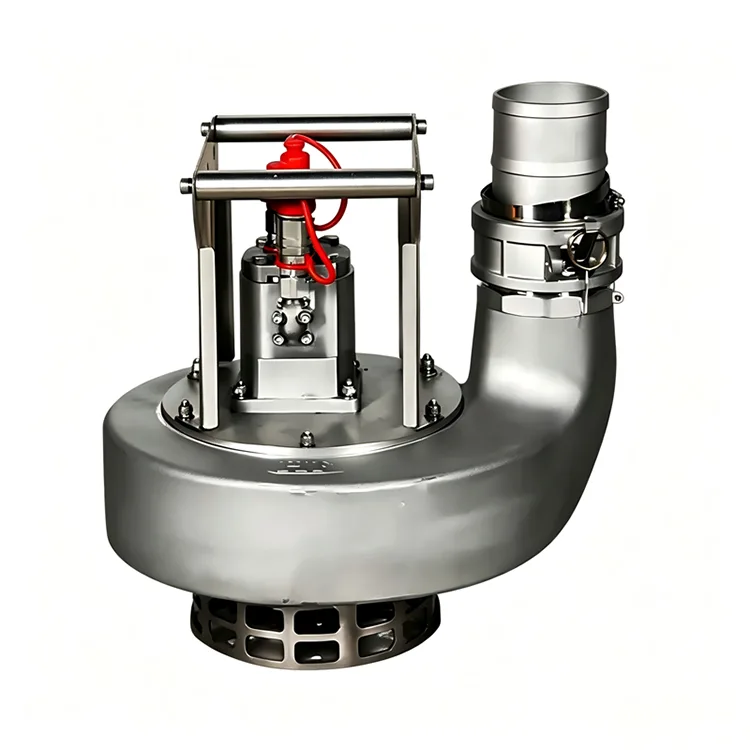
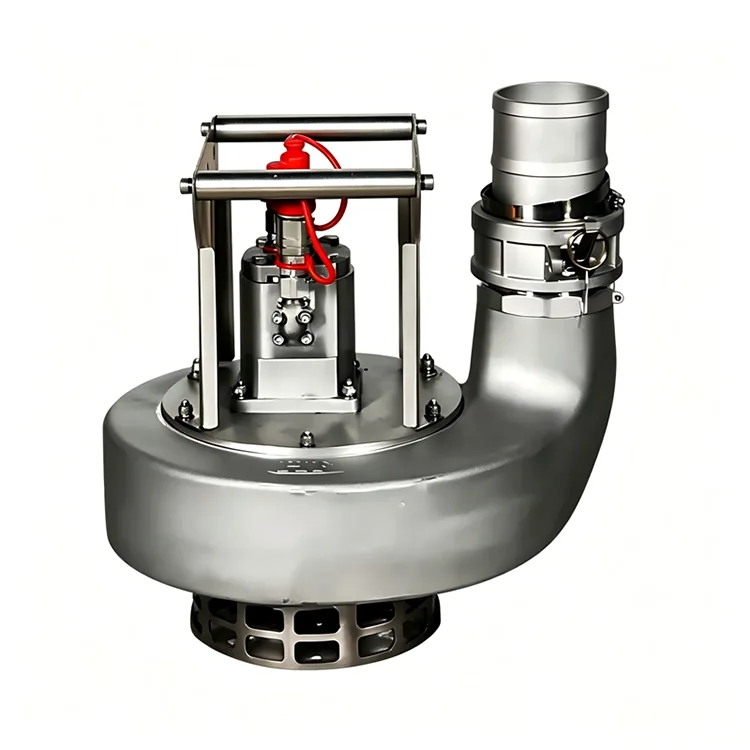
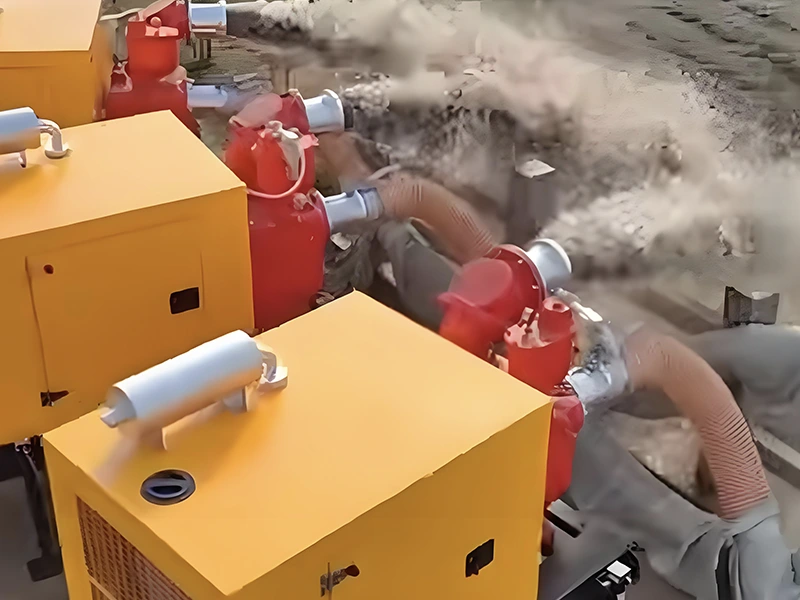
For projects involving muddy water, sediment, sand, and solid debris, Jianghe provides a Hydraulic Slurry Pump designed for demanding drainage, dredging, and emergency rescue conditions. Its hydraulic drive enables flexible deployment without relying on a conventional electrical power supply, making it suitable for challenging field environments.
A hydraulic slurry pump is designed to move water containing sediment, mud, sand, and other solid particles where ordinary clean-water pumps may struggle. By using an external hydraulic power source, this type of pump can operate with excavators, skid steer loaders, and hydraulic power units, providing greater mobility for emergency and remote operations. Jianghe's hydraulic slurry pump combines hydraulic drive technology, large-particle handling capability, wear-resistant construction, and high-flow performance. The model can achieve a maximum displacement of 240 m³/h, a maximum head of 25 m, and pass particles up to 25 mm, making it particularly suitable for flood drainage, river dredging, silt removal, and emergency water management.
A hydraulic slurry pump is a heavy-duty pumping device developed to transport water mixed with abrasive or solid materials. Unlike conventional pumps that rely directly on electric motors or fuel-powered engines, a hydraulic model receives its driving force from a hydraulic motor and an external hydraulic power source.
This design is particularly valuable when drainage or dredging work takes place in locations where electrical power is unavailable, unsafe, or difficult to install. A compatible excavator, skid steer, or hydraulic power unit can provide the hydraulic flow required to operate the pump.
Jianghe's model uses a hydraulic motor with a recommended hydraulic flow range of 27–40 L/min and a maximum working pressure of 255 bar. Its structure is intended for environments where conventional drainage equipment may encounter excessive sediment, debris, or abrasive particles.
For buyers comparing different hydraulic pumping solutions, the combination of hydraulic mobility and solid-particle handling is one of the most important characteristics to evaluate.
How Does a Hydraulic Slurry Pump Work?
The operating process is relatively straightforward but highly effective for difficult pumping conditions:
Hydraulic power input: Hydraulic oil from an excavator, skid steer, or power unit drives the hydraulic motor.
Impeller rotation: The hydraulic motor transfers rotational energy to the pump impeller.
Fluid intake: Rotation creates a pressure difference that draws muddy water, slurry, sediment, and wastewater into the pump.
Pressure generation: Centrifugal force accelerates the material through the pump chamber.
Discharge: The slurry is transported through the discharge outlet to the required drainage or processing location.
The hydraulic configuration also allows rapid start and stop control. This can be useful during emergency response operations, where equipment may need to be repositioned frequently according to changing water levels or site conditions.
What Are the Key Specifications?
Performance specifications should be evaluated according to the actual drainage distance, elevation, slurry concentration, particle size, and available hydraulic power. The following specifications describe the Jianghe hydraulic slurry pump configuration:
Parameter
Specification
Maximum Displacement
240 m³/h
Maximum Head
25 m
Maximum Working Pressure
255 bar
Hydraulic Flow Range
27–40 L/min
Maximum Particle Size
25 mm
Discharge Diameter
100 mm
Weight
26 kg
Overall Dimension
481 × 378 × 442 mm
These figures give purchasers a practical starting point when determining whether the pump can match their existing hydraulic machinery and project requirements. Hydraulic compatibility should always be confirmed before deployment.
What Are the Main Advantages?
1. Flexible Hydraulic Power
The pump does not require a dedicated electrical connection at the pumping point. It can use hydraulic energy supplied by compatible mobile machinery, which simplifies deployment in remote or flooded locations.
2. Strong Solid-Particle Handling
Slurry applications often involve materials that can damage or obstruct ordinary pumps. The pump is designed to handle particles up to 25 mm, making it suitable for sediment-laden water and many dredging conditions.
3. Wear and Corrosion Resistance
Continuous exposure to abrasive sediment can accelerate component wear. Wear-resistant and corrosion-resistant construction helps improve operating durability in muddy and harsh environments.
4. High Flow Performance
With a maximum displacement of 240 m³/h, the pump is designed for applications where substantial volumes of contaminated or sediment-heavy water need to be moved efficiently.
5. Easy Field Deployment
At approximately 26 kg, the pump can be more convenient to position and reposition than larger stationary pumping systems. This is especially useful for emergency drainage teams working across changing flood zones.
Where Can Hydraulic Slurry Pumps Be Used?
The operating characteristics of a hydraulic slurry pump make it suitable for applications where both water and solids must be transported.
Flood control and emergency drainage: Remove sediment-laden floodwater from roads, low-lying areas, and emergency work zones.
River dredging: Transfer water containing sand and accumulated sediment during river maintenance.
Silt removal: Handle muddy mixtures generated during pond, channel, and drainage-system cleaning.
Municipal drainage: Support emergency pumping where electrical infrastructure may be unavailable or compromised.
Construction sites: Drain excavations, foundations, and temporary work areas containing mud and suspended solids.
Emergency rescue: Provide mobile pumping capacity when rapid response is more important than permanent pumping infrastructure.
For applications involving particularly abrasive slurry, buyers should assess particle concentration, particle hardness, pumping distance, required head, and expected operating hours before selecting a configuration.
How Should You Select the Right Pump?
Choosing pumping equipment based only on maximum flow rate can result in poor field performance. A more reliable purchasing process considers the complete operating environment.
Determine required flow: Estimate how many cubic meters of water or slurry must be removed per hour.
Calculate required head: Consider vertical lift as well as pressure losses caused by hoses, bends, and discharge distance.
Analyze solids: Identify the maximum particle diameter and the concentration of sand, silt, gravel, or other solids.
Check hydraulic compatibility: Confirm that the excavator, skid steer, or power unit can provide the required hydraulic flow and pressure.
Consider operating conditions: Saltwater, abrasive slurry, continuous operation, and emergency deployment may require different material or configuration choices.
Discuss customization: For unusual projects, confirm discharge size, hydraulic motor interface, material selection, and accessories with the manufacturer.
This approach helps buyers avoid selecting equipment that appears powerful on paper but cannot operate effectively with their existing hydraulic system.
Why Consider Jianghe for Hydraulic Slurry Pump Supply?
Jianghe Flood Prevention specializes in flood control and emergency response equipment and provides hydraulic pumping solutions for demanding drainage environments. The company combines product development, manufacturing, technical support, and project-oriented service to support customers with different field requirements.
The hydraulic slurry pump is designed around practical emergency pumping needs, including flexible hydraulic drive, resistance to harsh operating conditions, large-particle passage, and high-flow drainage. Jianghe states that its product is CE-approved and that the company operates under an ISO 9001:2025 quality management certification. Factory testing reports can also be provided upon request.
Customization can be considered for projects requiring different discharge diameters, hydraulic motor interfaces, wear-resistant materials, or suction configurations. The standard discharge diameter is 100 mm, while customized options can include larger discharge sizes depending on project requirements.
For international buyers, factory-direct communication can also simplify technical confirmation. Instead of selecting a pump solely from a catalog, customers can provide their hydraulic power source, required flow, pumping head, slurry characteristics, and application environment for technical evaluation.
Frequently Asked Questions
Q1: Can a hydraulic slurry pump work with an excavator?
Yes. A compatible excavator can provide the hydraulic power required to operate the pump. Jianghe's standard configuration is designed for a hydraulic flow range of 27–40 L/min, with a maximum working pressure of 255 bar. The actual compatibility should be checked against the excavator's hydraulic specifications.
Q2: What particle size can the pump handle?
The specified maximum particle size is 25 mm. This capability makes the pump suitable for many sediment-heavy drainage and dredging applications. The actual material characteristics, concentration, and abrasiveness should also be considered when selecting equipment.
Q3: Is a hydraulic slurry pump suitable for flood emergencies?
Yes. Hydraulic drive makes the pump particularly useful where conventional electrical power is unavailable or unsuitable. It can be connected to mobile hydraulic equipment and deployed for flood drainage, municipal waterlogging, silt removal, and emergency rescue operations.
Q4: Can the hydraulic slurry pump be customized?
Customization is available for selected project requirements. Options may include discharge diameter, hydraulic motor interface, wear-resistant material, and suction components. Buyers should provide their operating parameters so the manufacturer can recommend an appropriate configuration.
Conclusion
A hydraulic slurry pump can be an effective solution when drainage involves mud, sediment, sand, and other solid particles. Its ability to use mobile hydraulic power provides deployment flexibility, while high flow capacity and large-particle handling make it suitable for flood control, river dredging, silt removal, municipal drainage, and emergency response. With appropriate hydraulic matching and project-specific selection, Jianghe's hydraulic slurry pump offers a practical option for demanding pumping environments. If you are evaluating equipment for a new project or replacing an existing slurry pump, contact us with your required flow rate, head, particle size, hydraulic power source, and application conditions to discuss a suitable solution and receive a tailored quotation.
We use cookies to offer you a better browsing experience, analyze site traffic and personalize content. By using this site, you agree to our use of cookies. Privacy Policy