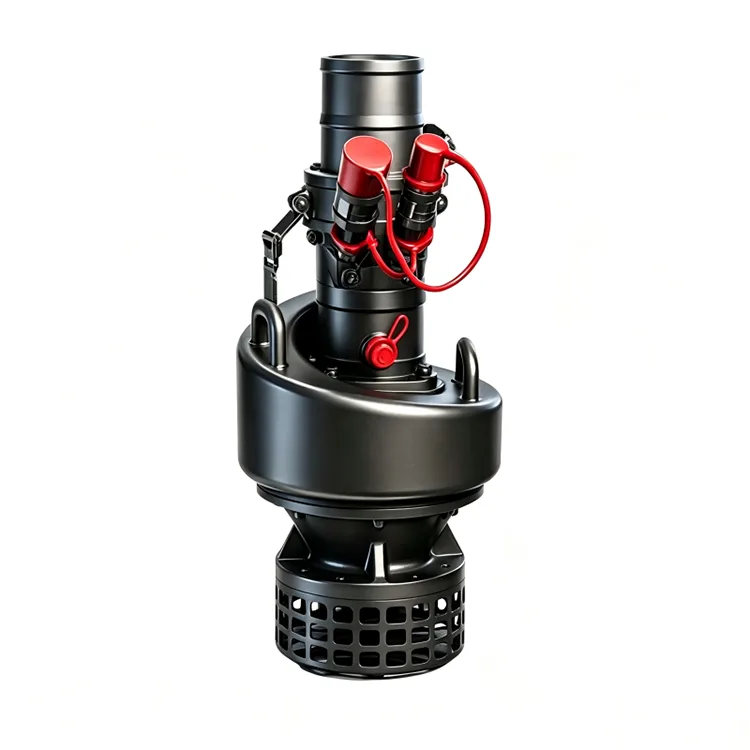
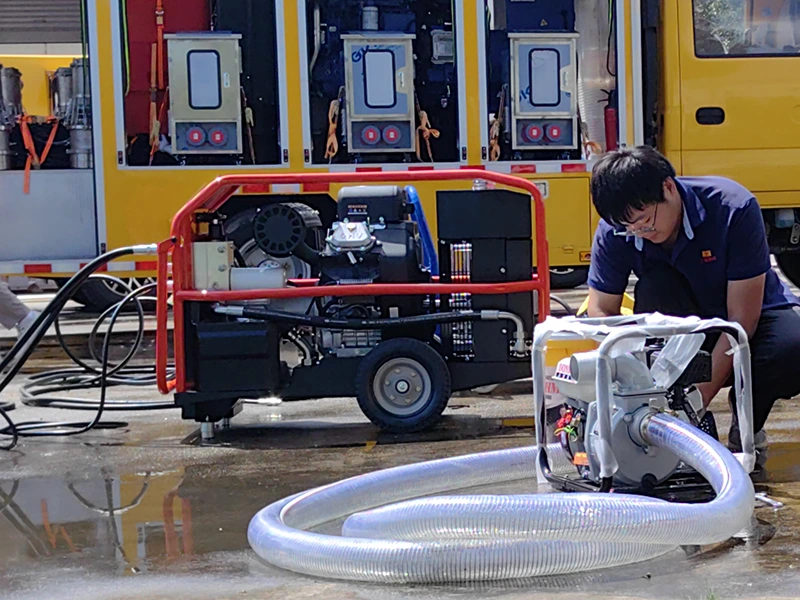
When floodwater rises quickly and conventional drainage systems cannot provide enough lifting capacity, the Hydraulic High-lift Pump from Jianghe Flood Prevention offers a practical solution for high-level water removal, long-distance discharge, and emergency drainage where stable electricity may not be available.
A hydraulic high-lift pump is engineered to move large volumes of water when drainage conditions involve significant vertical height differences, long discharge distances, or unstable power infrastructure. Unlike conventional electric pumps, a hydraulic-driven design uses hydraulic power to drive the impeller, making it particularly suitable for emergency flood control and mobile dewatering operations. Jianghe Flood Prevention's solution combines a high-lift pumping structure, spiral centrifugal impeller, quick-connect construction, lightweight aluminum alloy housing, and hydraulic drive technology. With a maximum displacement of 260 m³/h and a maximum head of 50 m, it can support demanding applications such as urban waterlogging, underground garage flooding, subway and tunnel drainage, river overflow response, industrial flood protection, and construction-site dewatering.
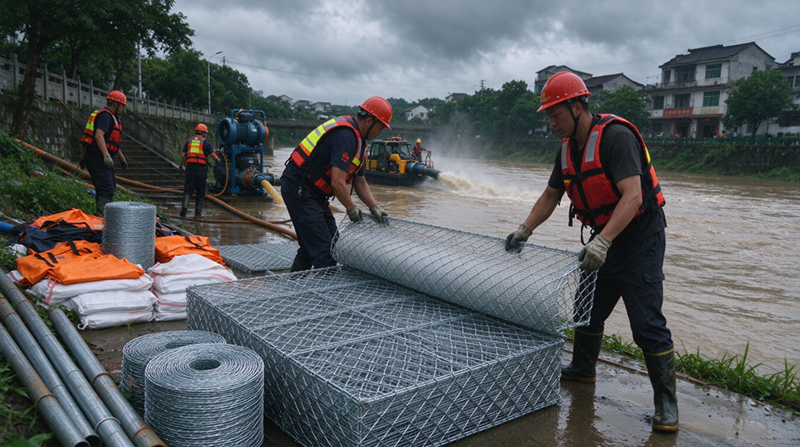
Flood control is not simply about removing water from one location to another. In many real-world emergencies, water must be transported upward from a basement, tunnel, foundation pit, low-lying street, or other depressed area before it can reach a safe discharge point.
This creates a critical engineering requirement: pump head. A pump with insufficient head may move water effectively under low-resistance conditions but struggle when the discharge point is significantly higher or when the pipeline is long.
A high-lift pumping system is therefore valuable when drainage projects involve:
Jianghe Flood Prevention positions its hydraulic high-lift solution specifically for these demanding scenarios, combining high lift, substantial water displacement, and rapid field deployment.
A hydraulic high-lift pump is a water pumping system driven by hydraulic power rather than relying directly on a conventional electric motor. Hydraulic energy is transferred to the pump's impeller assembly, allowing the equipment to generate the pressure required to transport water to a higher elevation.
This operating concept provides an important advantage during flood emergencies. When electrical supply is disrupted, flooded, or considered unsafe, a hydraulic power source can provide an alternative means of driving the pump.
The system is particularly suited to emergency rescue organizations, municipal drainage teams, construction contractors, industrial facilities, and government emergency departments that need mobile pumping equipment capable of working under complex conditions.
Understanding the technical specifications is essential when determining whether a high-lift pump can meet a particular drainage requirement. The following parameters are based on the product information published by Jianghe Flood Prevention.
| Parameter | Specification | Why It Matters |
|---|---|---|
| Maximum Displacement | 260 m³/h | Supports rapid removal of substantial water volumes |
| Maximum Head | 50 m | Suitable for high-level and long-distance water delivery |
| Weight | ≤37 kg | Facilitates transportation and rapid deployment |
| Dimensions | 300 × 365 × 570 mm | Provides a relatively compact field-deployment footprint |
| Maximum Working Pressure | 260 bar | Defines the hydraulic operating requirement |
| Maximum Particle Size | 20 mm | Helps determine suitability for water containing debris |
| Drainage Diameter | 100 mm | Supports high-volume drainage applications |
| Flow Range | 30–80 L/min | Indicates the hydraulic flow requirement for operation |
Actual operating performance depends on factors such as hydraulic power, water conditions, pipeline length, elevation, fittings, and system configuration. For procurement projects, the pump should therefore be selected according to the complete hydraulic and drainage requirements rather than one specification alone.
The basic working principle combines hydraulic drive technology with a multi-stage impeller system. Hydraulic power is transmitted to the pump, causing the impellers to rotate and transfer energy to the water.
This design makes the pump especially useful in situations where water must overcome a substantial elevation difference. The absence of direct dependence on grid electricity can also improve deployment flexibility during infrastructure failures.
The vertical integrated structure incorporates a quick-coupling design intended to simplify field assembly and disassembly. This can reduce preparation time during emergency operations while making subsequent maintenance and overhaul more convenient.
The optimized spiral centrifugal impeller structure is designed to provide both high lift and substantial flow capability. This combination is important when water must be moved over long distances or discharged to a significantly higher elevation.
The hydraulic model and power system are matched to reduce energy losses and maintain efficient water delivery. For organizations operating equipment over extended periods, efficient hydraulic performance can contribute to lower operating costs.
The high-strength aluminum alloy housing helps reduce equipment weight while providing corrosion resistance and durability. At a stated weight of no more than 37 kg, the pump can be easier for emergency teams to transport and position at temporary drainage sites.
Flooding can damage electrical infrastructure or create unsafe electrical conditions. A hydraulic-driven pump provides an alternative drive method, making it suitable for emergency areas where conventional electrically powered pumping equipment may be difficult to deploy.
The application range of a hydraulic high-lift pump extends beyond ordinary water removal. Its high-head characteristics make it suitable for projects where drainage must overcome elevation or pipeline resistance.
| Application | Typical Drainage Challenge | Potential Pumping Benefit |
|---|---|---|
| Urban Waterlogging | Large amounts of water accumulate in low-lying areas | Rapid mobile drainage and elevated discharge |
| Underground Garages | Deep flooding and limited access | High-lift water removal |
| Subway & Tunnels | Underground water with limited drainage routes | High-head emergency pumping |
| River Overflow | Sudden water intrusion during flooding | Fast emergency deployment |
| Industrial Facilities | Floodwater threatens critical infrastructure | Flexible emergency flood protection |
| Construction Sites | Foundation pits collect groundwater or rainwater | Mobile dewatering capability |
These applications align with the product's intended use in municipal emergency rescue, industrial flood protection, infrastructure response, and other demanding drainage environments.
Choosing a high-lift pump should begin with the actual site conditions rather than simply selecting the largest available model. Procurement teams should evaluate several parameters together.
For international buyers searching for a reliable China hydraulic high-lift pump manufacturer or supplier, technical communication before purchase is particularly important. Providing the expected flow rate, required head, water conditions, hydraulic power parameters, and discharge distance allows engineers to recommend a more appropriate configuration.
Emergency equipment needs to remain ready before a flood occurs. Proper inspection and operation can help protect the pump and reduce avoidable downtime.
Operators should also follow the manufacturer's technical instructions and site-specific safety procedures. High-pressure water and hydraulic systems can present serious hazards if incorrectly operated.
A hydraulic high-lift pump is mainly used for moving water where substantial lifting height, long-distance discharge, or unstable electrical supply creates a drainage challenge. Typical applications include flood control, underground drainage, tunnel dewatering, industrial flood protection, and emergency rescue.
The published maximum head for this model is 50 meters. Actual operating head and flow should be evaluated together because real performance depends on the hydraulic system, pipeline configuration, elevation, and water conditions.
Yes. The pump is hydraulically driven rather than directly dependent on grid electricity. This makes it particularly useful in flooded areas where electrical infrastructure is unavailable, damaged, or unsuitable for safe operation.
The published maximum particle size is 20 mm. Buyers should still assess the actual water quality and use appropriate filtration or intake protection when the water contains significant debris.
It is recommended to provide the required flow rate, total lifting height, discharge distance, pipeline diameter and configuration, water quality, particle conditions, available hydraulic pressure and flow, and expected operating environment. These details help a professional supplier determine whether the pump is suitable for the application.
Jianghe Flood Prevention specializes in flood control and emergency rescue equipment and provides hydraulic drainage solutions for municipal, industrial, construction, and emergency-response applications. Its hydraulic high-lift pump combines high-head pumping performance with a hydraulic drive, quick-connect structure, lightweight aluminum alloy construction, and field-oriented design. The company also provides technical consultation, configuration recommendations, delivery coordination, installation guidance, operational training, maintenance assistance, and emergency replenishment support.
For buyers evaluating a Hydraulic High-lift Pump for flood control, emergency drainage, or infrastructure protection, selecting equipment according to real flow, head, water quality, and hydraulic power requirements is essential. If you are sourcing a dependable solution directly from a China manufacturer and need help matching pump performance to your project, contact us at Jianghe Flood Prevention for technical consultation, configuration recommendations, and a tailored quotation.