Article Summary: Urban flooding caused by sudden rainstorms can threaten commercial properties, residential buildings, roads, warehouses, and municipal infrastructure. Choosing an efficient temporary flood protection system is essential for reducing water damage and improving emergency response. A Portable Combined Flood Control Board developed by Jianghe offers a practical solution through its L-shaped self-stabilizing structure, lightweight ABS construction, modular connection design, and tool-free installation. Designed for hard surfaces such as asphalt roads and cement floors, this reusable flood barrier helps businesses and emergency response teams establish temporary flood defense lines quickly and efficiently. This article explores its working principle, technical specifications, advantages, installation process, and key purchasing considerations.
Urban flooding has become an important concern for cities, commercial facilities, industrial parks, and property management organizations. Heavy rainfall, inadequate drainage capacity, and rapidly rising surface water can cause significant disruption within a short period.
Traditional flood protection methods, such as sandbags and permanent concrete barriers, may not always meet the requirements of emergency situations. Sandbags require considerable manpower and preparation time, while permanent structures cannot easily adapt to changing protection requirements.
For organizations that need flexible and rapidly deployable protection, portable flood barriers provide an alternative. These systems can be stored before the rainy season and deployed when flood risks emerge.
A well-designed temporary flood protection solution should offer several essential characteristics:
These requirements explain why modular and portable flood control equipment is attracting attention among municipal departments, industrial operators, and commercial property managers.
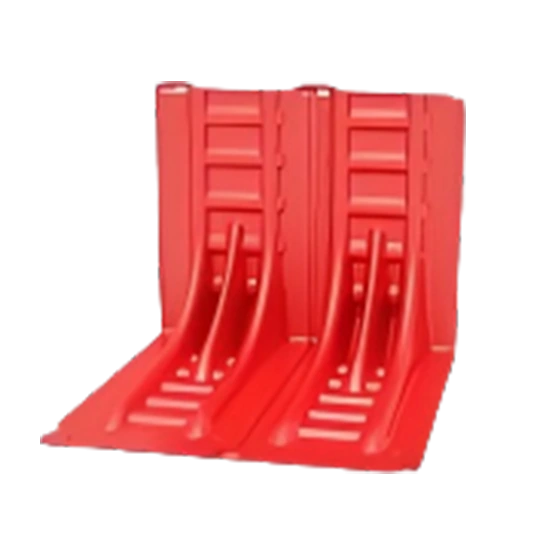
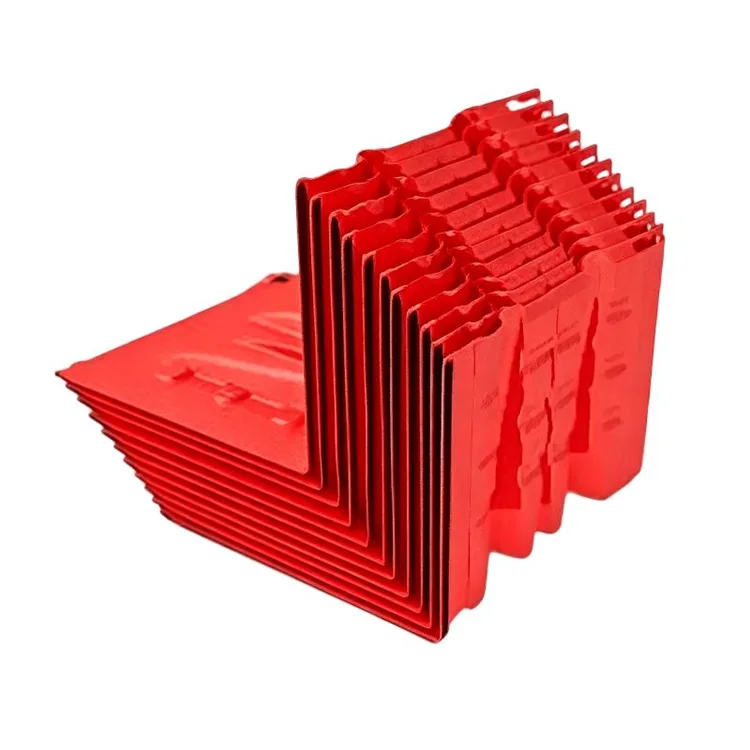
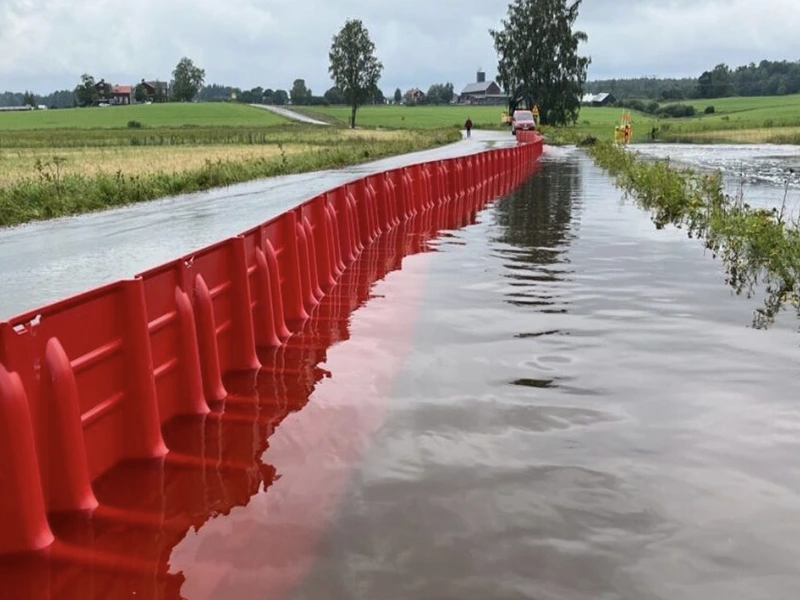
A Portable Combined Flood Control Board is a temporary flood protection panel designed to help prevent surface water from entering vulnerable areas. Unlike permanent flood walls, it can be transported, assembled, removed, and stored according to changing emergency requirements.
The product developed by Jianghe Flood Prevention is specifically designed for sudden urban rainstorms and waterlogging. Its L-shaped self-supporting structure uses the natural pressure of accumulated water to press the barrier against the ground, increasing contact friction and helping maintain stable positioning.
The product is suitable for relatively flat, hard surfaces, including:
Its modular design allows multiple panels to be connected into a continuous protective line. This makes it possible to configure flood protection according to the width and layout of the target area.
For more product information, visit the Jianghe Portable Combined Flood Control Board product page.
One of the most important design features of this flood protection equipment is its L-shaped self-stabilizing structure.
Instead of relying entirely on complicated external fixing systems, the barrier takes advantage of the natural pressure generated by accumulated water. As the water level rises against the panel, the resulting pressure helps push the base toward the ground, increasing friction between the barrier and the supporting surface.
This operating principle provides several practical benefits:
The product supports an adjustable bending angle of ±3°, providing additional flexibility when arranging the barrier along suitable boundaries.
However, installation conditions remain important. Ground flatness, surface cleanliness, connection quality, water depth, and expected flow conditions should all be evaluated before deployment. The self-stabilizing design should not be interpreted as a guarantee against every flood condition.
Technical specifications help buyers determine whether a temporary flood barrier is suitable for their intended installation environment. The following table summarizes the published specifications of Jianghe's portable combined flood protection panel.
| Specification | Technical Details |
|---|---|
| Product Name | Portable Combined Flood Control Board |
| Flood Control Height | 50 cm |
| Product Dimensions | 70.5 cm × 68 cm × 52.8 cm |
| Average Thickness | 5.1 mm ± 5% |
| Weight | 4.1 kg ± 5% per piece |
| Material | Red ABS with anti-UV surface coating |
| Structure | L-shaped self-stabilizing design |
| Adjustable Bending Angle | ±3° |
| Installation Speed | One person can install over 10 meters per minute |
| Installation Method | Tool-free modular connection |
| Storage | Stackable design |
| Warranty | 3 years |
ABS (Acrylonitrile Butadiene Styrene) is widely used in industrial and commercial products because of its balance of impact resistance, rigidity, and processing performance.
For temporary flood protection equipment, material selection directly affects handling convenience, durability, and long-term storage performance.
The red ABS construction of this product is complemented by an anti-UV surface coating, which helps improve resistance to ultraviolet exposure during outdoor storage and use.
Its individual weight of approximately 4.1 kg also makes transportation and manual handling more convenient than many heavier temporary protection systems.
When comparing temporary flood protection products, buyers should consider more than the nominal protection height. Installation efficiency, transportation, storage, material performance, and adaptability all influence the overall value of the equipment.
With a weight of approximately 4.1 kg per piece, the panel is designed for convenient handling. Its tool-free installation method reduces dependence on specialized equipment and complicated assembly procedures.
According to the manufacturer, one person can install more than 10 meters per minute under suitable conditions. This feature can help emergency teams establish temporary protection lines efficiently.
The combined design allows individual boards to be connected into a larger protective system. Instead of purchasing or installing one large permanent structure, users can arrange multiple panels according to the actual dimensions of the protected area.
This modular configuration is useful for locations with different entrance widths, boundary layouts, and temporary protection requirements.
Emergency equipment is often stored for extended periods before being needed. Storage efficiency is therefore an important purchasing consideration.
The stackable construction of this flood barrier helps reduce storage space requirements and simplifies transportation between warehouses and deployment locations.
Unlike disposable sandbags, reusable flood barriers can be recovered, inspected, cleaned, and stored after an emergency. This can support more efficient equipment management and reduce the need for repeated purchases.
The adjustable bending angle of ±3° allows minor alignment adjustments during installation. This provides additional flexibility when establishing a protective line along suitable hard surfaces.
A portable flood barrier can serve different industries and property types, provided that the installation surface and operating conditions are suitable.
Municipal emergency management departments can consider portable barriers for temporary protection around vulnerable road sections, public facilities, and other urban locations exposed to rainstorm waterlogging.
Shopping centers, office buildings, supermarkets, and retail facilities often have entrances that are vulnerable to surface water intrusion. Portable barriers can help establish temporary protective boundaries around these access points.
Industrial buildings may contain valuable machinery, electrical equipment, raw materials, and finished products. Deploying temporary flood protection at suitable entrances can help reduce the risk of water entering sensitive areas.
Property management companies can prepare modular flood barriers for underground garage entrances, community access roads, and other vulnerable areas. Deployment plans should be established before severe weather occurs.
Emergency response teams require equipment that can be transported and deployed without complicated preparation. Lightweight, stackable flood protection panels can form part of a broader emergency flood control equipment inventory.
It is important to remember that the appropriate protection configuration depends on site conditions, anticipated water levels, drainage capacity, and the potential force of flowing water.
Correct installation is essential for achieving the intended performance of a modular flood barrier. Jianghe provides a straightforward connection procedure that does not require special installation tools.
Choose a relatively flat and suitable hard surface, such as asphalt or cement flooring. Remove loose debris, stones, and other objects that could interfere with ground contact.
Measure the entrance or boundary requiring protection. Arrange the panels in advance and determine the direction of installation to minimize unnecessary adjustments during deployment.
Install the flood barriers sequentially from left to right. First, insert the connection mechanism between adjacent panels.
After positioning the connection mechanism, fasten the locking mechanism to secure the adjacent panels. Check that each connection is properly engaged before proceeding.
If minor directional adjustment is necessary, use the locking mechanism to fine-tune the placement angle within the specified ±3° range.
Before relying on the protective line, inspect the following items:
After the flood event, clean and inspect the panels before stacking them for future use. Any damaged components should be repaired or replaced before the next deployment.
Selecting flood protection equipment requires an understanding of the installation environment and the actual risks facing the property. A product with convenient installation features may not necessarily be appropriate for every flood scenario.
Before purchasing a portable combined flood control board, buyers should evaluate the following factors.
| Evaluation Factor | What Buyers Should Check |
|---|---|
| Protection Height | Compare the 50 cm panel height with the expected water level and site requirements. |
| Ground Conditions | Confirm that the installation area has a suitable hard and relatively flat surface. |
| Material Quality | Evaluate ABS construction, surface protection, and outdoor storage conditions. |
| Installation Efficiency | Consider the number of personnel and time required to establish the protection line. |
| Connection Design | Check the connection and locking mechanisms for reliable assembly. |
| Storage Requirements | Evaluate stacking, transportation, and warehouse space requirements. |
| After-Sales Support | Confirm warranty terms, technical assistance, and replacement component availability. |
Product quality is only one part of a successful flood protection strategy. Buyers should also consider the supplier's technical knowledge, product range, manufacturing capabilities, and ability to support different project requirements.
An experienced supplier can help customers evaluate product specifications, installation conditions, and procurement quantities before placing an order.
For larger projects, it is also beneficial to discuss customized purchasing arrangements, bulk orders, transportation, and equipment maintenance requirements in advance.
A Portable Combined Flood Control Board is designed to provide temporary protection against surface water intrusion during rainstorms and urban waterlogging. It can be deployed around suitable entrances, roads, commercial buildings, warehouses, and other vulnerable locations to establish a temporary flood defense line.
The product is manufactured using red ABS material with an anti-UV surface coating. This material provides a practical balance of structural rigidity, impact resistance, and handling convenience for temporary flood protection applications.
The specified flood control height is 50 cm. Buyers should compare this height with the expected flood level and site-specific requirements before selecting the appropriate protection configuration.
No special installation tools are required for the standard connection procedure. The panels are installed by inserting the connection mechanism and fastening the locking mechanism. Proper surface preparation and installation checks are still necessary.
According to Jianghe's published product specifications, one person can install more than 10 meters per minute under suitable conditions. Actual installation speed may vary depending on site layout, operator experience, and ground conditions.
Yes. The product features a modular combined structure. Multiple panels can be connected sequentially to create a longer temporary flood protection line, making it suitable for different entrance widths and boundary layouts.
Yes. The product is designed for relatively flat hard surfaces, including asphalt roads and cement floors. The installation area should be inspected to ensure that its surface conditions are appropriate for stable positioning and effective ground contact.
Yes. The product features a reusable design. After use, the panels should be cleaned, inspected for damage, and properly stacked in a suitable storage environment to maintain their condition for future deployment.
The published product specifications indicate a three-year warranty. Buyers should confirm the applicable warranty coverage, terms, and after-sales service details with Jianghe before ordering.
Buyers can contact Jianghe Flood Prevention directly to discuss product specifications, order quantities, customized requirements, and delivery arrangements. The company supports custom bulk orders and provides product consultation for different flood protection projects.
As urban flood risks continue to challenge commercial properties, industrial facilities, and municipal infrastructure, flexible temporary flood protection equipment has become an important part of emergency preparedness. A Portable Combined Flood Control Board offers a practical combination of lightweight construction, modular connectivity, an L-shaped self-stabilizing structure, and convenient installation.
With its 50 cm flood control height, approximately 4.1 kg unit weight, red ABS construction, anti-UV surface coating, and stackable design, Jianghe's flood barrier is developed to meet the needs of various temporary flood protection scenarios. Its tool-free connection procedure and adjustable ±3° bending angle further support efficient deployment on suitable hard surfaces.
Choosing the right flood control equipment requires careful consideration of water levels, ground conditions, installation requirements, and project-specific risks. Working with an experienced supplier can help ensure that the selected solution matches the actual operating environment.
Are you looking for a reliable and convenient flood protection solution for your commercial property, industrial facility, or municipal emergency project? Jianghe provides professional flood control equipment and supports bulk purchasing requirements. Explore our Portable Combined Flood Control Board to learn more about its specifications and applications. For product inquiries, technical information, customized purchasing requirements, and competitive quotations, contact us today and let Jianghe help you build a more efficient flood defense strategy.